Post-doc position open in IGME (CSIC, Madrid) for a 2.5 years contract, in the frame of the Spanish Momentum Program (https://momentum.csic.es/en/). See details attached (link to pdf).
If interested contact Julián García-Mayordomo (julian.garcia”at”igme.es)
The 7th Fault2SHA workshop, “New frontiers in earthquake rupture forecasting and probabilistic seismic hazard assessment”, was held in Vienna (Austria) from 6 to 8 July 2026, attracting a large number of attendees and featuring fruitful presentations and discussions.
The workshop focused on methodologies for predicting seismic rupture, multi-cycle earthquake simulators and their integration into probabilistic seismic hazard assessment. It provided a unique opportunity to discuss approaches, share experiences and foster interdisciplinary collaboration within the community.
The three-day programme featured five keynote presentations by leading researchers in the field and a closing round-table discussion with the following participants:
Kevin Milner – United States Geological Survey, USA
Laurentiu Danciu – ETH Zürich, Switzerland
Edward Field – United States Geological Survey, USA
Matt Gerstenberger – Earth Sciences New Zealand
Constanza Rodríguez-Piceda – Università Roma Tre, Italy
The event was organised by A. Valentini (University of Vienna), O. Gómez-Novell (University of Barcelona) and F. Iezzi (University of Naples).
We are pleased to invite you to the 7th Fault2SHA Workshop on “New Frontiers in Earthquake Rupture Forecasting and Probabilistic Seismic Hazard Assessment (PSHA)”, which will take place in Vienna, Austria, on 6–8 July 2026.
The workshop will focus on evolving methodologies in earthquake rupture forecasting, multi-cycle earthquake simulators, and their integration into probabilistic seismic hazard assessment. It will provide a unique opportunity to discuss innovative approaches, share experiences, and foster interdisciplinary collaborations within the community.
The program will feature five keynote speakers, leading experts who will share cutting-edge insights and perspectives on the future of earthquake science and seismic hazard assessment.
If you are interested in participating, please fill out the pre-registration hereby December 31st
We look forward to your participation — see you in Vienna!
Bayesian Inversion of Seismic Intensities for Historical Earthquake Analysis
Studying large historical earthquakes is crucial for seismic hazard assessment. Unlike instrumental events recorded by seismometers, historical earthquakes occurred before the advent of such instruments. Their magnitude and location must be inferred from macroseismic intensity data, such as historical documents and damage reports. To estimate these parameters, seismologists use Intensity Prediction Equations (IPEs), which model ground shaking intensity as a function of earthquake magnitude, distance, attenuation, and local site conditions. However, IPEs must be regionally calibrated using instrumental data, and poorly calibrated models lead to biased estimates of historical earthquakes. This project aims to develop a Bayesian probabilistic approach to jointly estimate earthquake magnitudes, locations, and IPE parameters, integrating both historical and instrumental data. Unlike traditional methods, this approach will account for uncertainties more comprehensively, leading to improved historical earthquake characterization. Ultimately, this research will contribute to the development of a new seismicity catalog, which will be used to update and improve seismic hazard models for metropolitan France.
Candidate Profile
The ideal candidate should have a strong background in geosciences or computer science and be proficient in programming. Applications from women are especially welcome. The candidate is expected to start on autumn 2025, but the starting date can be adjusted.
Supervision & Collaboration
The PhD will be supervised by Thomas Bodin (ICM-CSIC, Barcelona) in collaboration with Pierre Arroucau (EDF) and the SIGMA3 research program. The student will participate in scientific meetings and contribute to developing algorithms for French seismic databases.
Application Process
For any information about the project and the application process, contact us at the following addresses. To apply, please send the following documents to: tbodin@icm.csic.es, pierre.arroucau@edf.fr
CV
Statement of research interests
Names and contact information of referees
The Institute
The Institut de Ciències del Mar (ICM) of the Spanish National Research Council (CSIC) is the most multidisciplinary research institute on marine science in Spain. It is also the first marine science centre to be accredited as a Severo Ochoa Centre of Excellence, a recognition to the institution’s leadership in the field of marine research in Spain and to its commitment to create social impact. Our goal is to develop research of excellence to inspire a society in harmony with the blue planet, in line with the values of the United Nations Decade of Ocean Science for Sustainable Development (2021-2030). Under the motto “Ocean Science for a Healthy Planet,” the ICM conducts frontier research and foster both knowledge and technology transfer on topics related to ocean and climate interactions, and impact mitigation of natural and anthropogenic hazards. For further information, please visit the our website.
Post-doc position open in IGME (CSIC, Madrid) for a 4 years contract, in the frame of the Spanish Momentum Program (https://momentum.csic.es/en/), which includes more than a hundred contracts for pre-doc and post-doc profiles.
See details attached (look for the project in page 131: “Digital twins for large earthquakes – integration of physics-based simulators and geological data for large scale earthquake forecasts”).
If interested contact Julián García-Mayordomo (julian.garcia”at”igme.es)
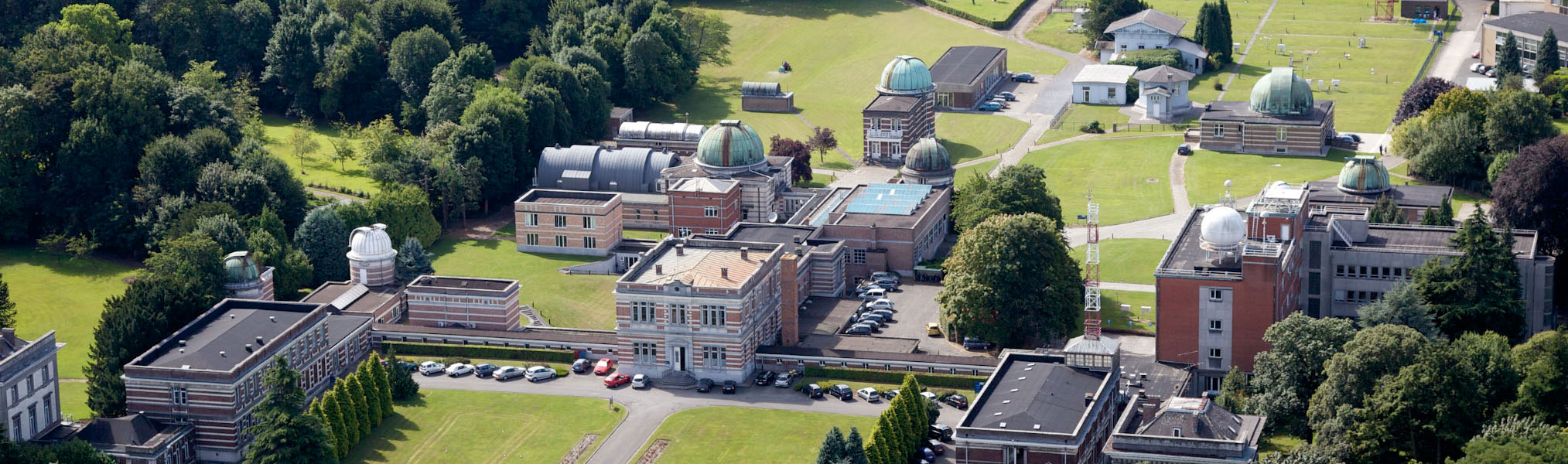
The Seismology and Gravimetry Section of the Royal Observatory of Belgium and the Unit of Physical Geography and Quaternary of the University of Liège recruit a postdoctoral researcher in earthquake geology and tectonic geomorphology in the frame of the FED-tWIN programme of the Belgian Science Policy Office BELSPO aiming at promoting research cooperation between Federal Research Institutes and Universities in Belgium.
A new Fault2SHA tool has just been released! Introducing PEACH, a method and accompanying code to automatically correlate paleoseismic datasets from multiple sites to derive fault system chronologies. The approach can enhance the precision of earthquake rupture histories on faults, both in terms of event time constraints and earthquake rupture extension.
Marc Ollé López MSc Thesis on “New palaeoseismic data for the characterisation of a complete transect on the Alhama de Murcia Fault (SE Spain)” awarded with the Jorge Civis second prize of the Geological and Mining Institute of Spain.
Ten months after the kick-of-meeting of the TREAD project in Chieti (Italy), the European team, closely interconnected with the Fault2SHA initiative, will meet again. The members of the project, dedicated to finding new ways to better understand seismogenic faults and to improve seismic hazard analysis within the Euromediterranean region will meet in Aix-en-Provence (France), during the First Meeting of the project, which will take place during next Wednesday 29 November.
Aix-en-Provence
This appointment will allow the members to have a general overview of the first steps on each of the work packages and on the 11 PhD projects. The event will follow a 2-days workshop, including field work, where the main protagonists of TREAD, the 11 PhD students, will meet for the first time. These students were selected before last summer more than 600 applicants from all over the world, through an exhaustive selection process involving specific panels for each of the positions. They come from Asia (Iran, Kazakhstan), Europe (France, Italy, Germany and the Netherlands) and South America (Colombia) and will follow a 3 to 4 years PhD program designed to cover specific aspects grouped into the three main thematic blocks of TREAD; 1) Earthquake Observations, 2) Physical Properties and Processes, and 3) Earthquake Hazard and Risk. They won’t do it alone, but as part of a collective and interactive research that will include continuous online meetings to share results, problems and new questions; monthly lectures with experts from the three areas (available here); two on-site training schools and 4 workshops (see the general program). The first these, which will take place next week, will focus on the challenges of identifying earthquake sources in slowly deforming regions and will include a visit to the 1909 M6 earthquake (Traveresse region) as well as specific training in the identification and characterisation of fault sources and geological effects; advanced geomorphological (photogrammetry, GIS analysis,..) and geophysical tools, scaling relationships, and an overview of the Mediterranean tectonics, among others.
First online meeting of the TREAD Project.
These pre-doctoral researchers don’t know each other yet, and don’t know yet that they will be the backbone of the project; at the time that they will be looking to solve the key questions and challenges proposed, they will indirectly connect a wide network of specialists that form part of the beneficiary and partner institutions (part of the consortium). To know more about what we are doing, follow the project updates in the social media and the web page. We are preparing short capsules to reveal the multiple sides of the TREAD project.
A new coordinated project, composed by three subprojects led by fault2sha members of the Eastern Betics fautl2SHA-lab has been funded by the Spanish Ministry of Science and Innovation (PID2021-124155NB-C31).
Project Title: SHaKER, Seismic Hazard Knowledge for Earthquake Resilience
IPs: José A. Álvarez Gómez, José J. Martínez Díaz (UCM, subproject model_SHaKER), Carolina Canora (UAM, subproject paleo_SHaKER) and Alejandra Staller (UPM, subproject Geo_SHaKER)
The main objective of the SHaKER project is to advance in the knowledge of the seismogenic processes of seismic sources with the final objective of improving urban resilience to seismic disasters. To achieve this, we delve into the characterization of seismogenic source models with the integration and correlation of a number of disciplines in an interdisciplinar and multidisciplinar approach. To characterize the seismic sources we will use geological, geochemical, geotechnical, geodetic and geophysical data in addition to the development of numerical modelling and data analyses through machine-learning techniques. The numerical modelling will allow us to get insight into the complex, nonlinear, relations between the faults of the system, but also including external geological processes and tectonics in the long term evolution of fault systems.
These seismic source models are the basis for the development of new seismic and tsunami hazard and risk assessment studies, whose results will be essential to establish new proposals for improving urban resilience. The SHaKER project will help to estimate the faults seismic cycle and transient behaviours and characterize those seismogenic sources, including their kinematics and mechanical properties. These data will help us to quantitatively assess the sensitivity to uncertainties, thus contributing to reach the UN SDG11 in terms of the improved assessment of seismic risk, making the cities more inclusive, safe, resilient, and sustainable. In concordance with this aim we will develop also better assessments of earthquake triggered slope instabilities, earthquake surface ruptures and liquefaction.
We will continue the studies carried out in previous projects in two seismically active and densely populated zones, with different tectonic behaviours and transcurrent faults of special interest: the Eastern Betic Shear Zone (EBSZ) and the El Salvador Fault Zone (ESFZ). The EBSZ is one of the areas with the highest seismicity in the Iberian Peninsula where the largest populations (Lorca, Totana, Alhama de Murcia) are located directly above the fault traces. The need for a detailed study of the behaviour and geological history of these faults became evident after the 2011 Lorca earthquake, moderate magnitude event that caused important damage. The ESFZ is a system of strike-slip faults with significant seismic activity and a medium to high deformation rate, aligned within the volcanic arc, where a large part of the country’s population is concentrated. In this case, we will try to improve the knowledge of the ESFZ in the less studied areas, expanding our study to the Nicaraguan and Guatemalan volcanic arcs (including the Jalpatagua fault).
The SHaKER project will be backed by a multidisciplinary research team made up of geologists, geochemists, geophysicists, mathematicians, civil engineers and geomatics engineers. This guarantees the integration and correlation of diverse data sources, as well as the establishment of different approaches to assess the seismic hazard and its relationship and influence on the seismic risk and future urban planning. The results of the project will help to reinforce the resilience of cities in terms of seismic risk, generating products and tools that will be useful for public institutions and decision-makers, who work in emergency planning before de disaster.


 If you are interested in participating, please fill out the pre-registration